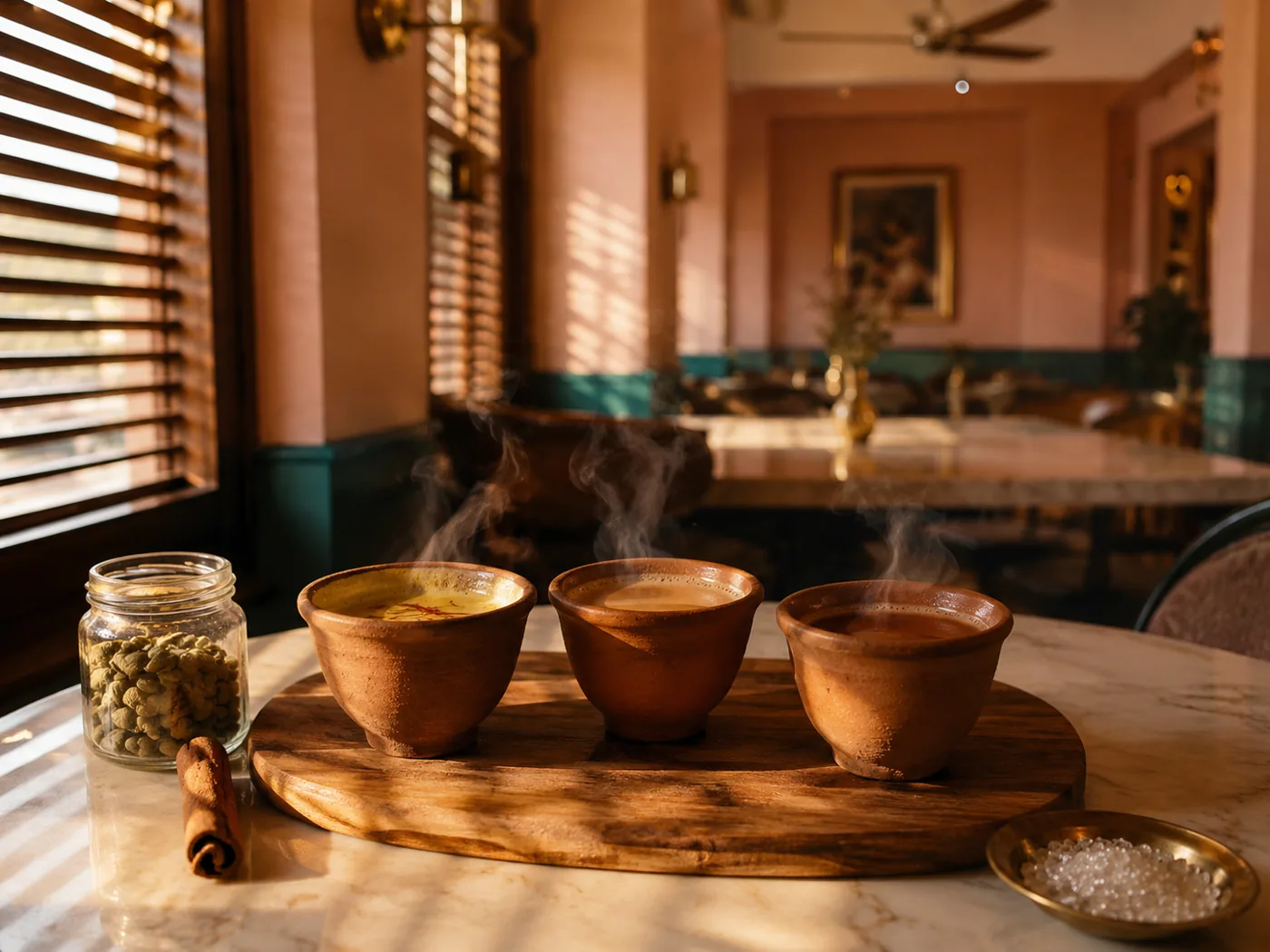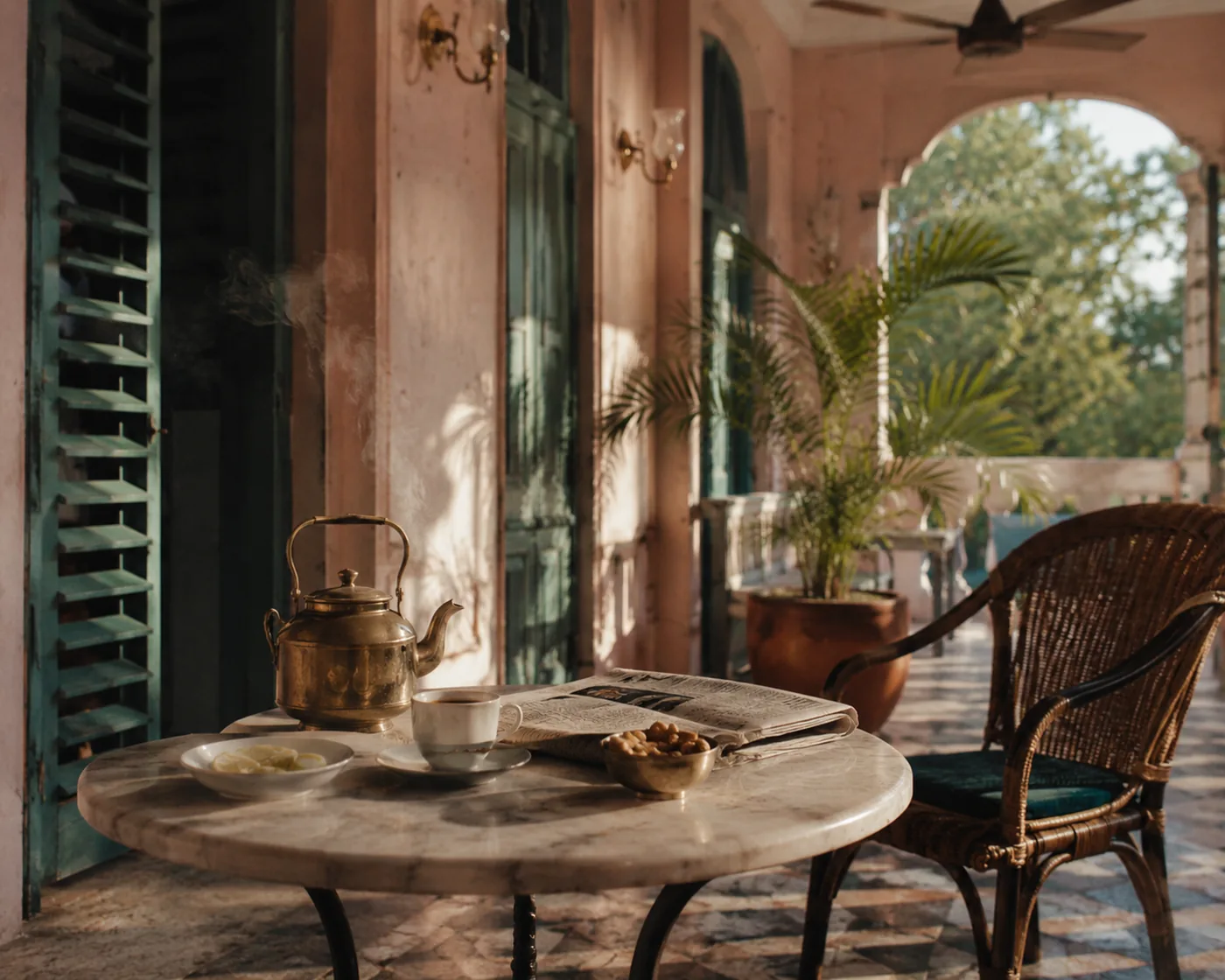
Picture an old bungalow, somewhere in India.
Thirty-five degrees outside. The verandah catches whatever breeze is going. A ceiling fan does its best. There's lemon water on the table, a bowl of cashews, a brass kettle on the side. Chai arrives without anyone asking.
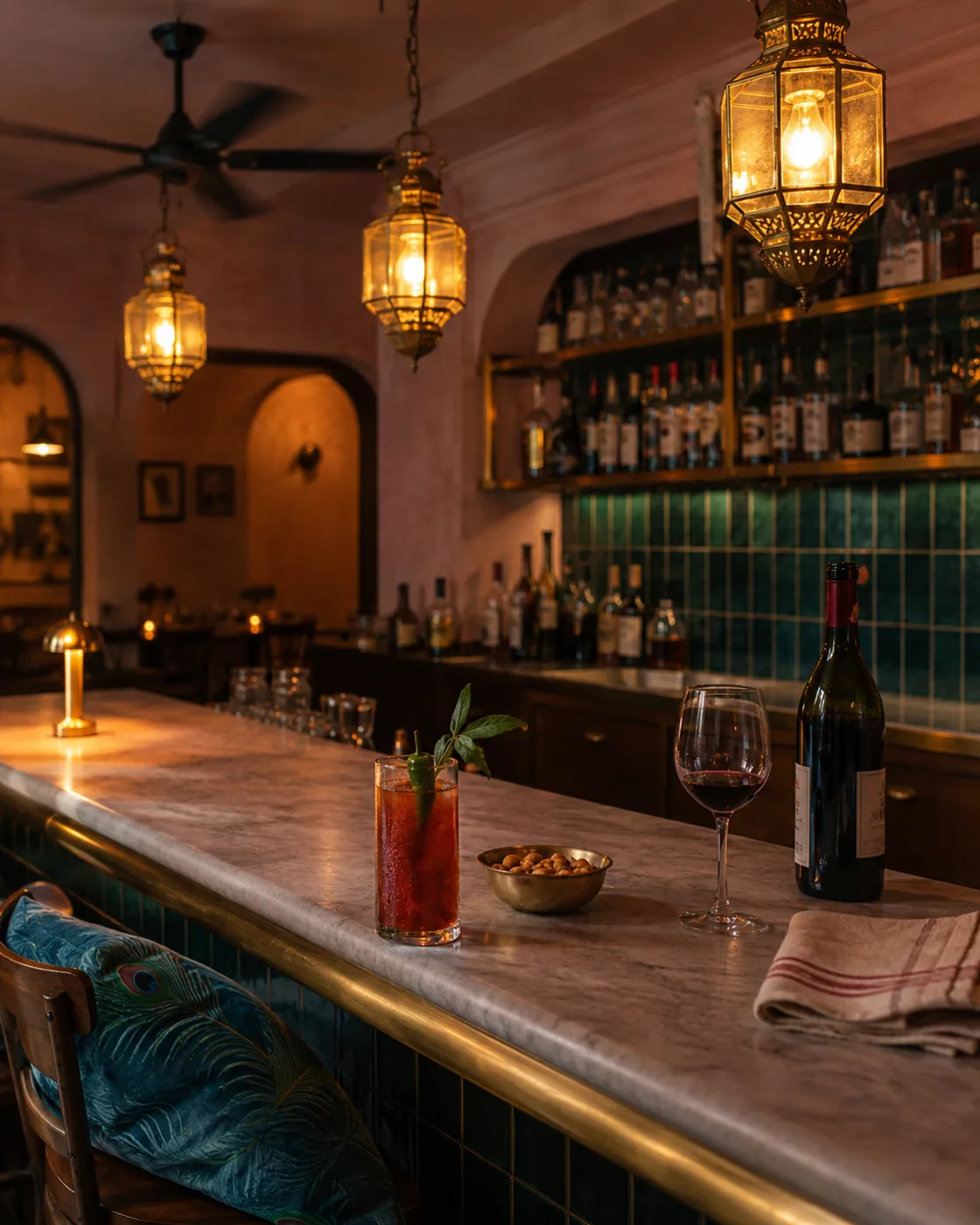
Someone comes back from the market and the cook sends out something small and hot — a piece of fish, a vada, a bowl of chaat. By four, the bar opens. A gin and tonic with curry leaf. A cold beer for the man who's just come in from the heat. A tamarind sour for the aunt who's been reading on the long chair.
Mid-afternoon, more food. By six, onions are frying and people are coming home. Dinner is a curry, rice, dal, another beer. After dinner, chai. Nobody rushes. Nobody is sent away. The kitchen runs all day because the day runs all day.
01 · The ideaWhat we wanted to bring to High Street.
Not a curry house. Not fine dining. Not a chain. An Indian bistro. Open from twelve, running through till late, the same kitchen and the same bar working the long afternoon together.
Cocktails before. A bottle of Kingfisher or a glass of wine with the food. Karak chai after. Thali at lunch when you've got an hour. Small plates in the afternoon when you've got fifteen minutes. A proper dinner in the evening when you've got three hours. The Chai Flight if that's all you came for.
Pop in for one plate. Stay for five. Come for chai any time. Come for a Maharaja Old Fashioned at six. Come at nine because you finished work and didn't want to cook. The room knows what to do at every one of those moments because the bungalow did.
02 · The foodLineage, not invention.
Some of what we cook came from streets. Mumbai's vada pav carts, Kolkata's kathi roll wallahs (the original Indian wrap, invented in 1932), the chaat counters of Old Delhi. Sharp food, made fast, eaten standing up. We make ours the same way the carts do — to order, with hands, on a small plate.
Some came from home kitchens. Grandma's chicken curry on the menu means something — it's the dish your mother makes; the one you can only get if you know someone's mother. The dal cooks for thirty-six hours because that's how long it takes. The rogan josh is built on fennel and dried ginger because that's how it's built in the valley.
Some came from the regional traditions. Rajasthan's laal maas, the red lamb of the desert kingdoms. Tamil Chettinad — duck with star anise and pepper, the cooking of merchants who travelled to South-East Asia and came home with spice. Kerala's coast — the sea bass on curry-leaf mash, a dish this kitchen has been cooking for twenty years. Hyderabad's biryani, sealed in a clay handi, forty minutes in the oven.
The dishes have lineage. The bistro has time.
03 · The address15 High Street has a memory.
The address came to us with a history we take seriously. Long before us, this room was Mint & Mustard — the restaurant that earned 15 High Street its place in the Michelin Guide as the best Indian in Wales. People still walk in and ask, half-quietly, whether it's the same family. It is.
The same hands on the pots. The same instinct for the long table. A different table.
Michelin Guide recognition as the best Indian restaurant in Wales. Ten plus years of awards, write-ups and very loyal regulars. The kitchen has not forgotten. Same kitchen. New table.
The bistro is what came next, because the family thought there was something missing in Cardiff — somewhere Indian you could go at three, at six, at eleven. Somewhere that didn't ask whether you were here for lunch or for dinner, because it didn't really care. Somewhere with a bar and a verandah and a fan running, all at once.
04 · What's on the menuA thali of regions.
The menu reads as one room, even though the food comes from many. Twelve sections — Brunch, Chaat, Snacks, Salads, Tandoor, Bistro, Kari, Biryani & Thali, Sides, Sweets, Junior, Drinks. The brunch service, Friday through Sunday from ten till two, runs the long Indian breakfast — masala eggs, the Full Indian, kejriwal benedict, iddiyappam with coconut stew, bottomless masala chai if you settle in.
If you want the lineage in detail, we wrote a separate piece on it. Punjab to Kerala, Mumbai's pavement to Calcutta's wok. Read the regional traditions →
Same kitchen. New table. Open from twelve, every day.