India's musical history has a trumpet section.
Alongside the traditions people more readily associate with the country sits another remarkable story: African-American bandleaders, Goan trumpeters, hotel orchestras, film studios and musicians who heard something new and made it their own.
It is a story worth knowing before the first set of Bombay Jazz, our new Thursday evenings at Chai St Indian Bistro on Cardiff High Street.
Because Indian food and live jazz have rather more in common than a good night out.
How jazz found a home in India
Jazz grew out of African-American musical life. Its travels brought it into contact with audiences and musicians around the world, including India.
One defining moment in Bombay, now Mumbai, came in 1935, when American violinist and bandleader Leon Abbey brought an all-Black jazz band to the city. His arrival helped establish a scene whose influence would reach well beyond the people who could afford an evening in a grand hotel.
Journalist Naresh Fernandes explores that world in Taj Mahal Foxtrot: The Story of Bombay's Jazz Age. Through the lives of musicians including Abbey, pianist Teddy Weatherford and Goan trumpeter Frank Fernand, he traces how jazz became part of the city's cultural life. His subject is music, but also a city learning what it could become. About Fernandes's book.
Even the title has a local story. Taj Mahal: A Foxtrot was composed by Mena Silas and recorded in April 1936 by Crickett Smith and his Symphonians, who were playing a season at Bombay's Taj Mahal Hotel. Bombay was becoming a place where this music was made as well as heard. Fernandes on the recording.
The Goan musicians who helped change the soundtrack
Among the musicians who made jazz their own was Antonio Xavier Vaz, better known as Chic Chocolate.
Born in Aldona, Goa, he learnt music at his parish school and became one of Bombay's celebrated trumpeters. By 1945, he was leading Chic and His Music Makers. His powerful playing and admiration for Louis Armstrong earned him the nickname "the Louis Armstrong of India".
His career also reveals how porous the boundaries between musical worlds could be. During the 1950s, Chic worked increasingly in Hindi cinema, assisting composers including C. Ramchandra and Madan Mohan. He even appeared in film sequences himself.
The distance between the bandstand and the recording studio was surprisingly short.
Musicians carried their experience from one to the other, helping connect Bombay's jazz life with the music reaching cinema audiences across India. Explore the American Institute of Indian Studies' Chic Chocolate exhibition, curated by Fernandes.
Beyond the ballroom
There is a temptation to leave Indian jazz in black and white: dinner jackets, gleaming instruments, an elegantly dressed audience.
But the music kept moving.
In 1978, Bombay hosted the first Jazz Yatra, bringing Indian and international musicians together. That same year, keyboard player Louis Banks, saxophonist Braz Gonsalves and singer Pam Crain headlined a concert at Calcutta's Kala Mandir that became the album Explorations.
Here was another side of Indian jazz: adventurous, collaborative and interested in what could happen next. Tabla and thavil joined the ensemble; Indian rhythmic ideas helped shape the music. Calcutta, now Kolkata, was an essential part of the story too, with Banks's band developing its close musical understanding through regular performances at the Blue Fox on Park Street.
Those repeated nights mattered. A band learns something from playing together in front of people that it cannot learn on paper. Fernandes's liner notes for Explorations.
What does jazz in India look like today?
Look at the current programmes and a varied picture emerges.
India's 2026 International Jazz Day listings included events in Mumbai, Pune, Chennai, Bengaluru, Delhi, Gurugram and Goa. Bengaluru's programme extended across five venues over five days. In Delhi, The Piano Man advertised a New Orleans celebration with pianist Arjun Sagar Gupta; in Panjim, Jazz Goa continued its participation in the worldwide event. These are useful signs of a scene with several centres and different ways to encounter the music. International Jazz Day's India listings.
Mumbai also remains a stop for international performers. The National Centre for the Performing Arts has announced its 2026 International Jazz Festival for 20 to 22 November, featuring the Francesca Tandoi Trio, Nicole Zuraitis Quartet and Thana Alexa with Antonio Sánchez. NCPA festival programme.
The musical boundaries remain open, too. Guitarist and composer Dhruv Ghanekar's work moves between jazz, Indian musical traditions and other contemporary styles: a present-day example of the curiosity running through this history. Explore Ghanekar's work.
Taken together, these examples suggest a living network of clubs, festivals, organisers and musicians. They don't tell us that every venue is thriving. They do tell us that Indian jazz has a present tense.
And that brings us to Cardiff.
Bombay Jazz at Chai St Indian Bistro
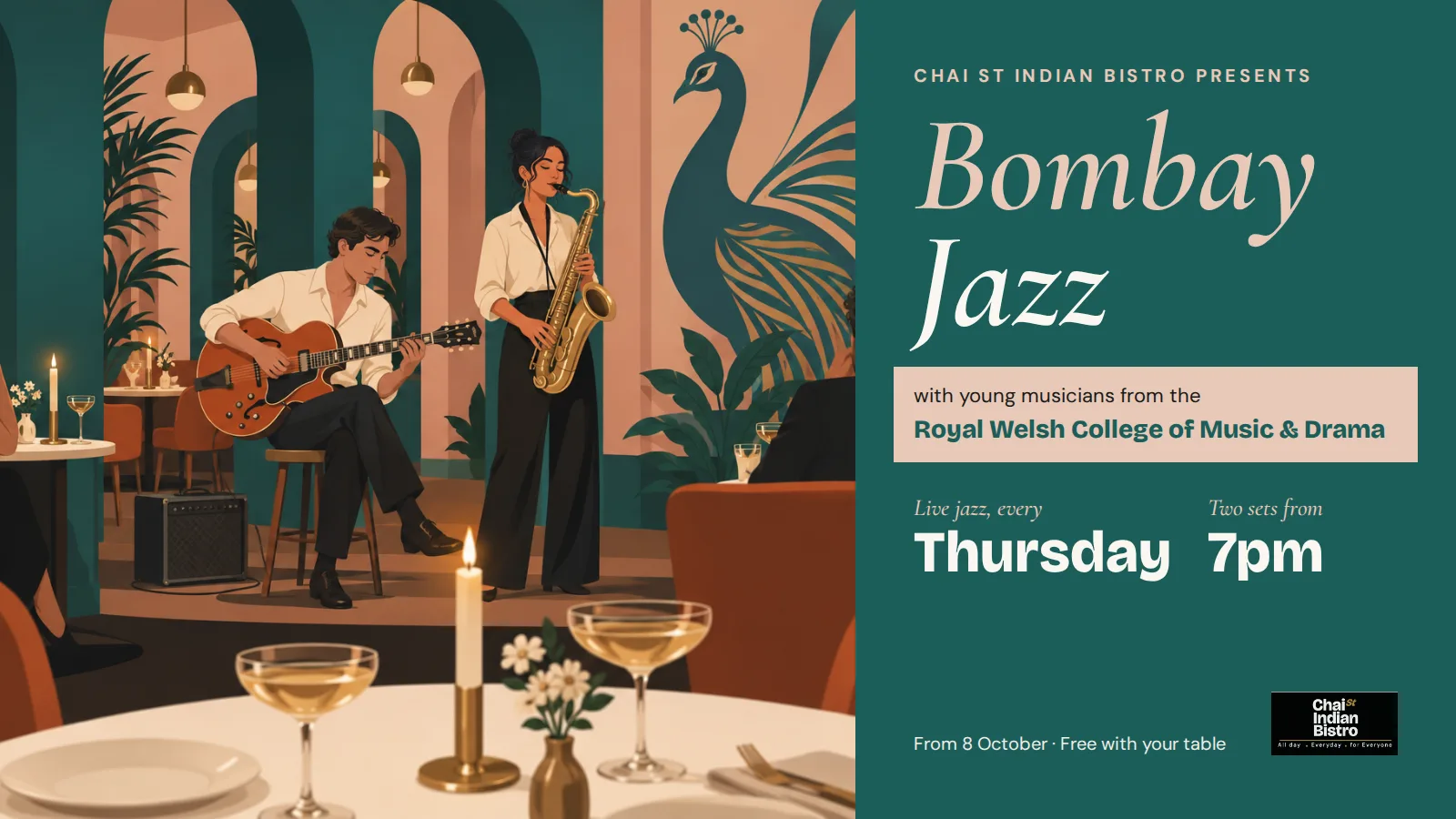
From Thursday 8 October 2026, Bombay Jazz brings young musicians from the Royal Welsh College of Music & Drama to our bistro at 15 High Street, close to Cardiff Castle.
There will be two sets from 7pm, every Thursday, with the full menu available throughout the evening. There is no ticket or cover charge.
Chai St pays the musicians a guaranteed fee. If you would like to contribute more, the QR code on your table lets you do that, with every penny going to the players. Bombay Jazz details on What's On.
For us, that is the most useful way to celebrate this history: give musicians somewhere to play, give people a reason to listen, and make an evening of it.
If you remember this address as Chai Street, meet Chai St Indian Bistro: our all-day home for lunch, small plates, cocktails, dinner and chai.
On Thursdays, bring someone you've been meaning to catch up with. Order something for the middle of the table. Let the first set turn into the second.
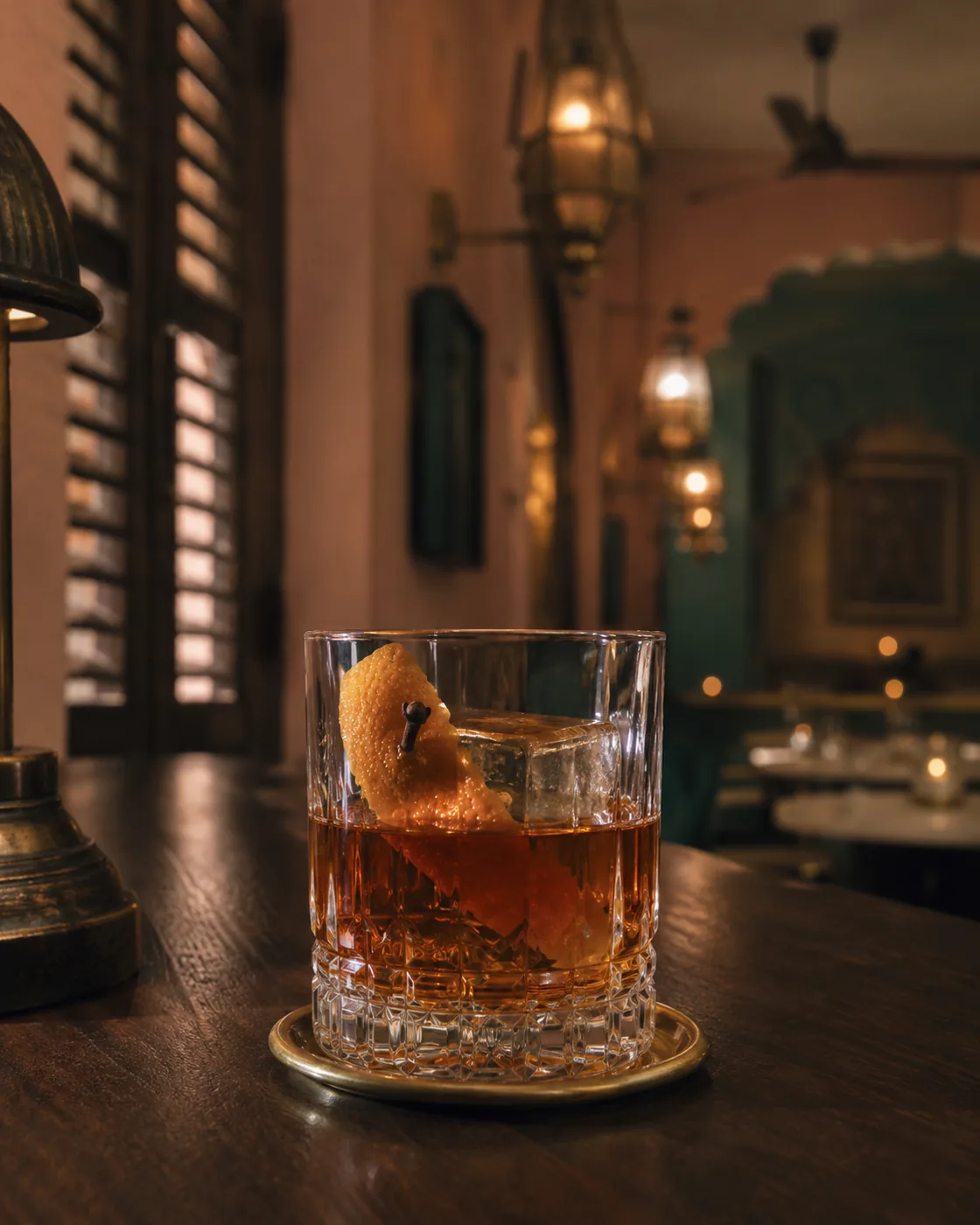
And now, jazz on Thursdays.
Chai St Indian Bistro · 15 High Street, Cardiff CF10 1AX · 029 2039 9399
Keep exploring
For the stories behind the bandstands, start with Naresh Fernandes's Taj Mahal Foxtrot: The Story of Bombay's Jazz Age. His companion website includes an audio guide with historic recordings. For the sound of it, the Finding the Groove exhibition pairs archive photographs with recordings from the 1930s to the 1970s, from Bombay's dance bands to Asha Puthli and Louis Banks. Put something on while you decide who's coming to dinner.