Wales v Japan at the Principality kicks off at 16:40 on Saturday 7 November 2026 — the first home match of the inaugural Nations Championship. A late-afternoon kick-off is a gift. It turns a Saturday into a proper long lunch, then a short walk to the game.
A late-afternoon kick-off — what to do with the time
Lunch from twelve is the sensible call. Arrive between 12:00 and 14:30, finish by 15:30, pay at four, walk down. Out our door at 15 High Street, right up to Cardiff Castle, left down Westgate Street past the Angel, straight to the ground. Eight minutes on the clock. Six if you walk fast. Through the turnstiles for the anthems.
That's the ideal. The reality: a Saturday lunch worth having runs long. Which is why we open at twelve and why the kitchen is designed for it. Our winter menu runs small plates and chaat at the front, kari and tandoor and biryani in the middle, chai at the back. Order loosely. Add as you go. The match-day menu, which is a tighter version of all of this, switches on automatically on Saturday morning.
What to order before 4:40pm
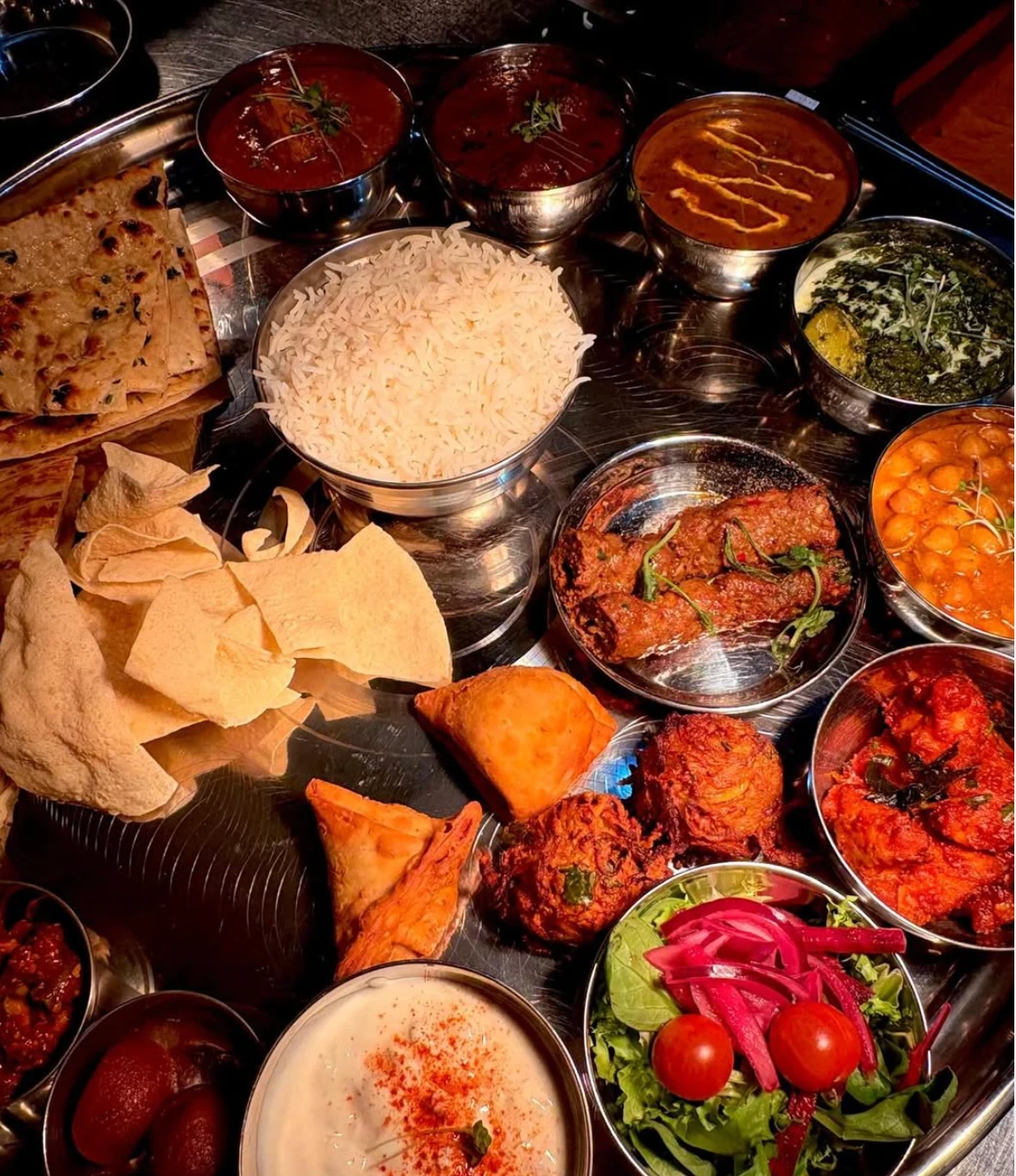
If you want to be through the door of the Principality by 4:30 — and you should — a thali or a biryani is the fastest route. A thali is the full eighty on one plate: two kari, dal, rice, Bombay aloo, naan, raita and pickle, and a starter besides. A biryani is Hyderabadi — chicken, lamb, prawn or vegetable, layered in the handi, cooked in its own steam, cucumber raita on the side.
If you've got a table of six, a mix of small plates and two kari to share is the move. Chicken 65 and Keralan Chilli Squid off the top; Butter Chicken and Rogan Josh from the kari page; a biryani on the side for the carbs; naan and roti; chai at the end. Twenty minutes to order, fifty to eat, ten to settle up.
Lunch at twelve, chai at four, down the hill at 4:15. That's the whole plan.
Japanese curry started in an Indian kitchen
Here's a thing that doesn't come up often. The Japanese love curry — karē raisu, curry rice, is one of the three most-eaten dishes in the country. Where did it come from? Not India, directly. Japan picked up curry in the 1870s and 1880s from the British Royal Navy, which had picked it up from the Indian cooks who ran its galleys. Japanese curry is Indian curry filtered through a British ship.
You can see it on the plate. The katsu curry sauce at a Tokyo canteen is thick, slightly sweet, and not very spicy — a long way from a kari in Lucknow or Kerala. But the spice line is the same. Turmeric and coriander, cumin and fenugreek, a background of warm garam. If you've eaten a plate of Katsu Curry on a Thursday night in Shinjuku and a plate of Butter Chicken on a Thursday night at Chai St, you've eaten two dishes that share more DNA than either country usually admits.
Which is a long way of saying this: Japan's cooking and India's cooking are not strangers. They share a cabinet. They cook slowly. They build flavour in layers — dashi, mirin, miso on one side; masala, ghee, slow onion on the other. Umami and masala are different words for the same instinct. That's the match-up on the plate today.
After the final whistle
5:40pm kick-off means roughly 6:30pm full-time. From the stadium, eight minutes back the way you came puts you at our door by twenty to seven. The kitchen is still running. If lunch was the long afternoon, dinner can be the short evening — a biryani or the Nihari Lamb Shank, a cold Kingfisher, chai after. Or a cocktail and small plates at the bar. The restaurant is open until eleven on a Saturday; the walk-back trade is who the back half of the room is built for.
If you want to read ahead to the next two home games, the autumn hub post is here and the match-day page is here. See you Saturday.
Chai St Indian Bistro is at 15 High Street, Cardiff, next to Cardiff Castle. Three minutes from the Castle, eight from the Principality. Kitchen open from twelve, every day. Pob lwc.
Edited by Mel D'Souza, Director, Inspiring Restaurants Ltd.