Ask anyone who grew up in India about ghosts and, sooner or later, they will tell you about a bungalow. Not a castle, not a crypt: a long, low house with a verandah, a garden gone wild and shutters that have not opened in years. The bhoot bangla, the haunted bungalow.
Every town seems to have one. It is the house the children dare each other to touch on the way home from school, the one the rickshaw drivers take the long way round, the one where a light is said to come on in an upstairs room that has no electricity.
The bungalow at the end of the road
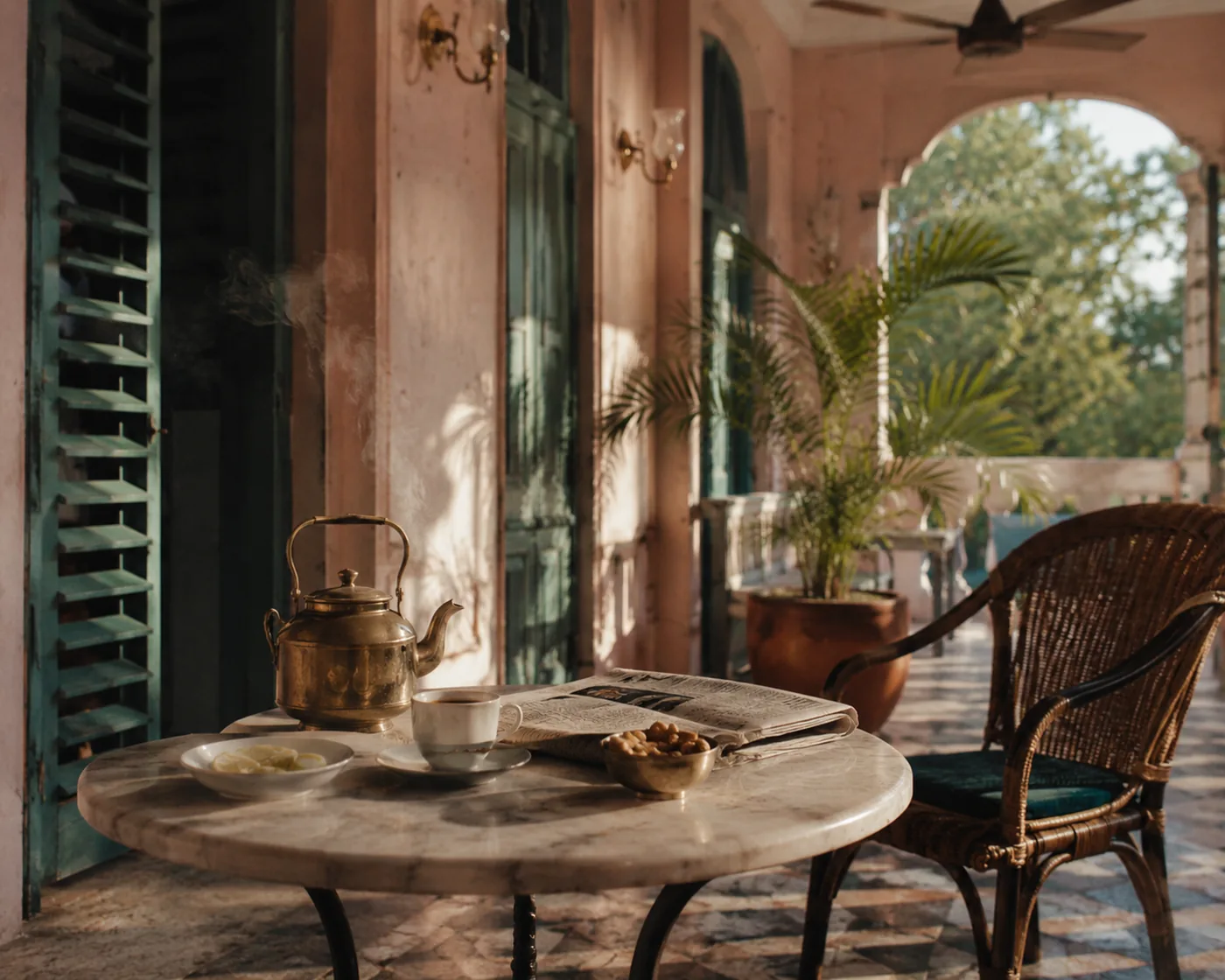
The word itself is Indian. A bangla was a single-storey house in the Bengali style, low and broad with a deep verandah, and the British carried the shape and the name across the empire. Colonial India filled up with them: officers' bungalows, planters' bungalows and the dak bungalows, government rest houses on the old postal roads where travellers slept on the way from one posting to the next.
When the officials and the travellers left, many of the bungalows stayed empty. Empty houses with long histories make good stories, and India has always been generous with stories. A fan that turns with no breeze. A gramophone playing in a locked room. A cook who still lays the table for a sahib who never came back from the hills. By the time Bombay's film studios were looking for a setting that would frighten and delight a cinema in equal measure, the haunted bungalow was already waiting for them.
A haunted bungalow is the most Indian of ghost stories: a house built for someone else, still keeping their hours.
Bhoot Bungla, Bombay, 1965
The definitive version came in 1965. Bhoot Bungla was directed, produced and co-written by Mehmood, the great comic actor of Hindi cinema, who also took the lead. The setup is pure gothic: a murder at a jungle bungalow on the edge of Bombay fifty years earlier, a family who keep dying in suspicious ways, threatening telephone calls in the night. Then Mehmood turns up as the president of a youth club and the whole thing tips into comedy, romance and music, with Tanuja as the heroine caught in the middle.
The music is the reason people still talk about it. The score was by a young R.D. Burman, early in a career that would reshape the sound of Hindi film, and he even turns up on screen in a small role as one of the club members. The film's best known number, Aao Twist Karen, sung by Manna Dey, is a Bombay twist, all brass and rhythm section, a song about dancing that sits in the middle of a ghost story.
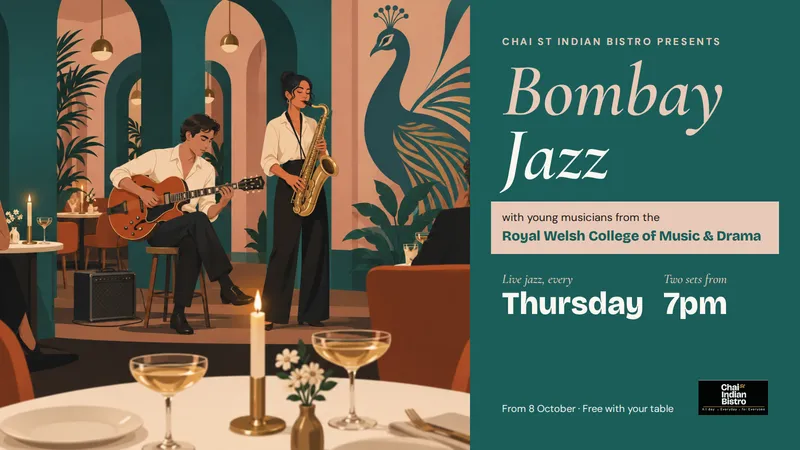
That sound did not come from nowhere. The film orchestras of 1960s Bombay were full of musicians who had learned their trade in the city's jazz bands and hotel ballrooms, many of them Goan. It is the same story we tell on Thursday nights, and you can read more of it in Bombay had jazz. Cardiff has Thursdays.
Halloween in our bungalow
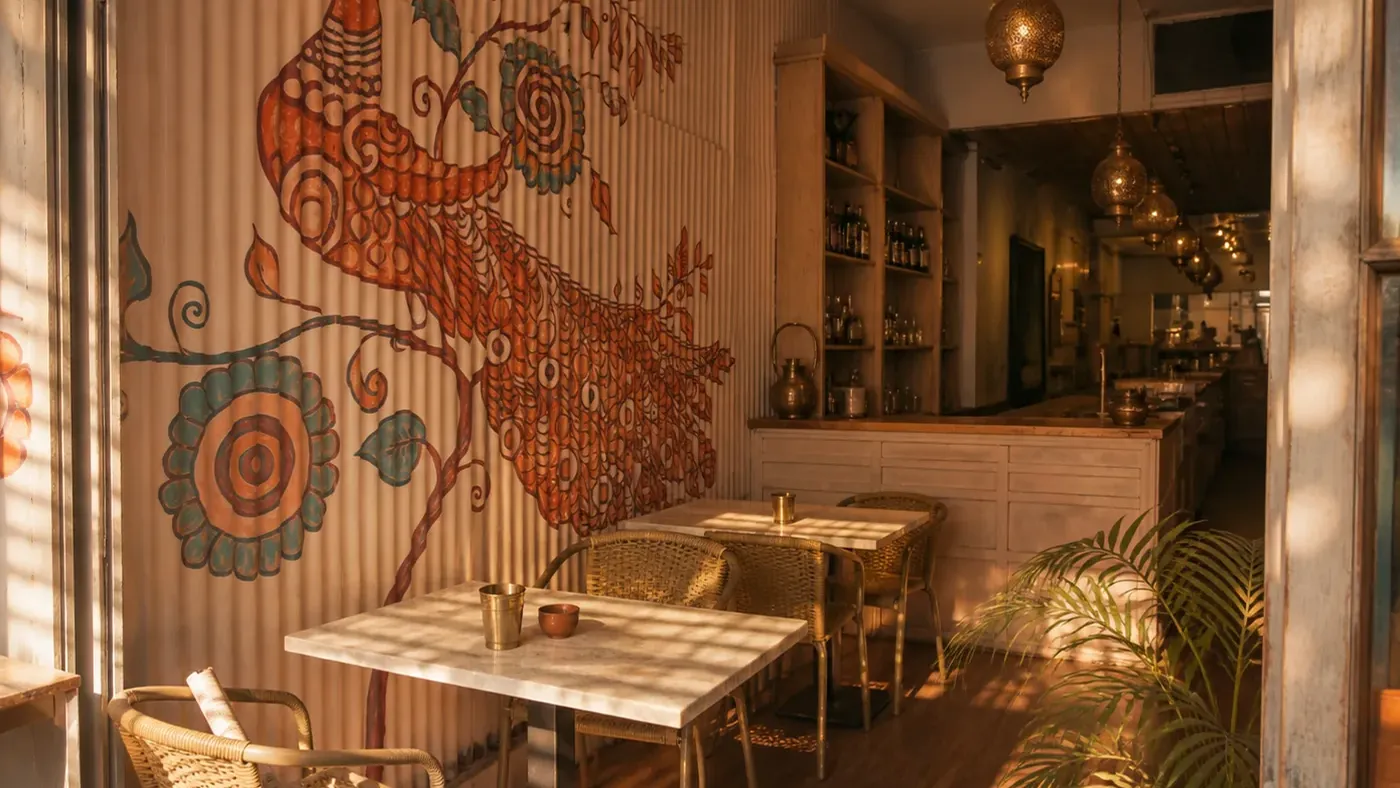
Chai St was built to feel like a sun-bleached colonial bungalow that has filled up with colour and life over the decades. There is a peacock on the wall, a ceiling fan turning slowly overhead, brass lanterns hanging down the length of the room and a long bar at the far end. The building has been feeding people at this address for years, and like every good bungalow, it has a few stories of its own.
On Halloween, the city fills up from the castle down. Come in from the noise. Take a table under the lanterns, order a cocktail and a few plates to share, settle into a kari or a thali, and finish with chai while everyone outside works out where they are going next. No costume required, although the peacock will not mind if you make the effort.

Cocktails before. Plates to share. Chai after. And something in the corner that nobody quite saw.
Chai St Indian Bistro · 15 High Street, Cardiff CF10 1AX · 029 2039 9399